How big is Val Thorens?
Val Thorens has 150 pistes served by 32 lifts — 11th for pistes of the 15 resorts we track in France. On lifts it ranks 14th of the 15.
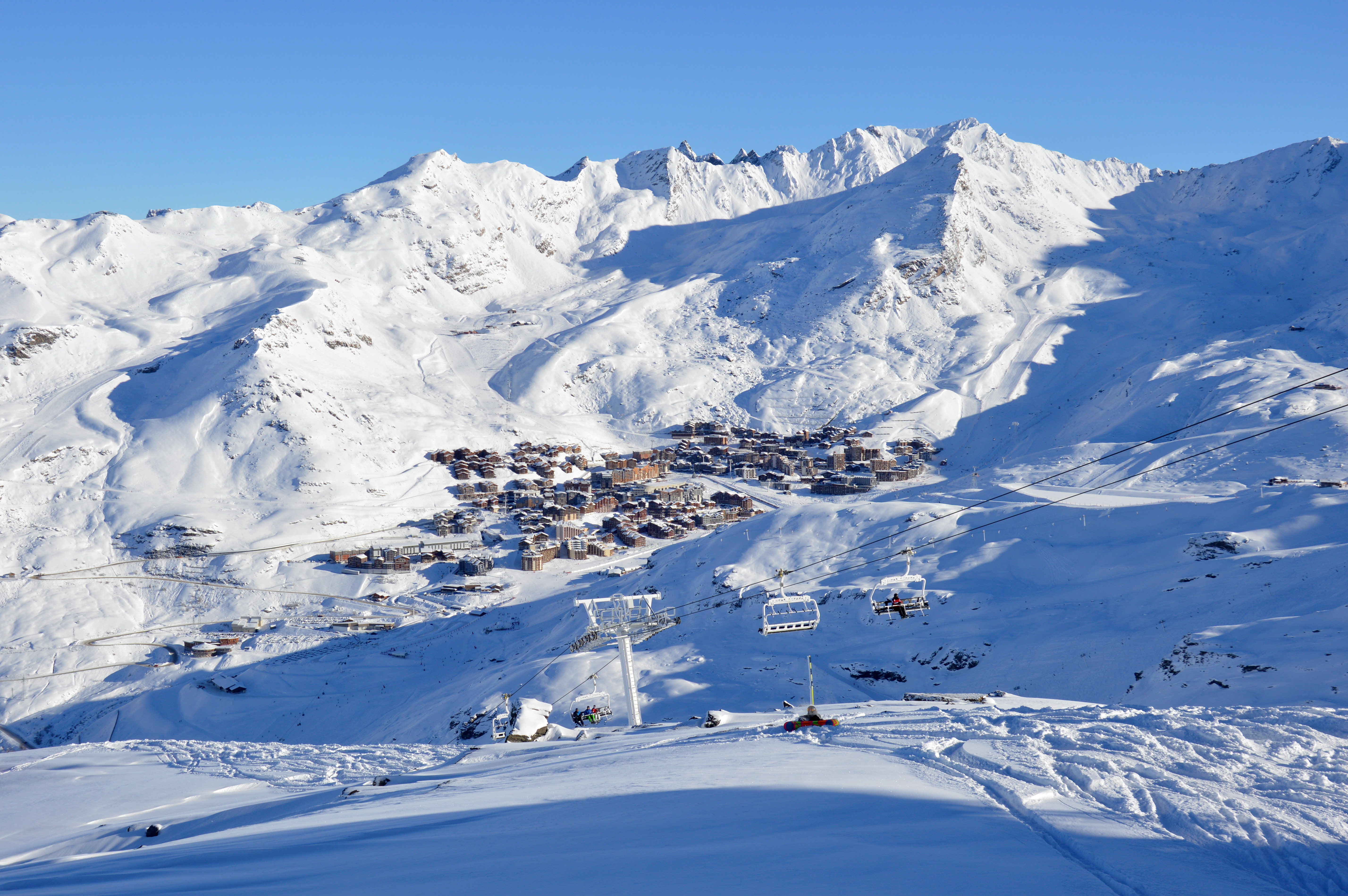
Savoie, France
Europe's highest ski resort with guaranteed snow from November to May
Val Thorens offers the highest skiing in Europe with modern facilities and excellent snow conditions throughout the season.
Val Thorens has 150 pistes served by 32 lifts — 11th for pistes of the 15 resorts we track in France. On lifts it ranks 14th of the 15.
The lifts run from 2300m at the base to 3230m at the top, a vertical of 930m. Of the 15 resorts we track in France, that is the 7th highest, with the 12th biggest vertical.
A base above 1,800m is high by Alpine standards, so the runs back to the village hold their snow better than at lower resorts.
The pistes at Val Thorens split 14% beginner, 40% intermediate and 46% advanced, against an average of 27% beginner and 32% advanced across the resorts we track in France.
On those numbers it suits confident skiers and riders looking for steep terrain.
With under 15% of runs graded beginner, first-timers may find the easy terrain limited.
For off-piste, our guide documents 4 zones at Val Thorens, with the lift to take and the avalanche risk for each.
Over the last ten winters Val Thorens has typically held skiable snow at mid-mountain from around 14 November to 27 May, about 196 days.
January is the best all-round month on the record, with an average base of 143cm, 108cm of new snow and 4.4 bluebird days.
Month-by-month snow history →The nearest airport with scheduled flights is Chambéry Aix les Bains (CMF), 66km away in a straight line. Annecy Meythet (NCY) is 80km, Turin (TRN), Italy is 84km. Road distances are longer, often much longer in the mountains, and the nearest airport is not always the one with the most flights.
A 6-day adult Val Thorens–Orelle costs €368 for 2026/27, or €61 a day. For value it ranks 14th of the 15 resorts we price in France.
Full lift pass prices and history →Airports with scheduled flights, nearest first. Distances are straight-line; by road they are longer, and in the mountains often much longer.
Pick the airport you fly from for an estimate of the journey to the resort.
Estimates from straight-line distances, not timetables: flights at typical cruising speed plus taxi and climb, transfers at an average 65 km/h by road. They leave out check-in and baggage time, and mountain roads in snow can take much longer. Check with airlines and transfer companies before booking.
€61 per day · 2.4 km of piste per € · #14 of 15 for value in France
The official Val Thorens piste map, published by Les 3 Vallées. It shows every run, lift and sector across 150 pistes served by 32 lifts, from 2,300m at the base to 3,230m at the top.
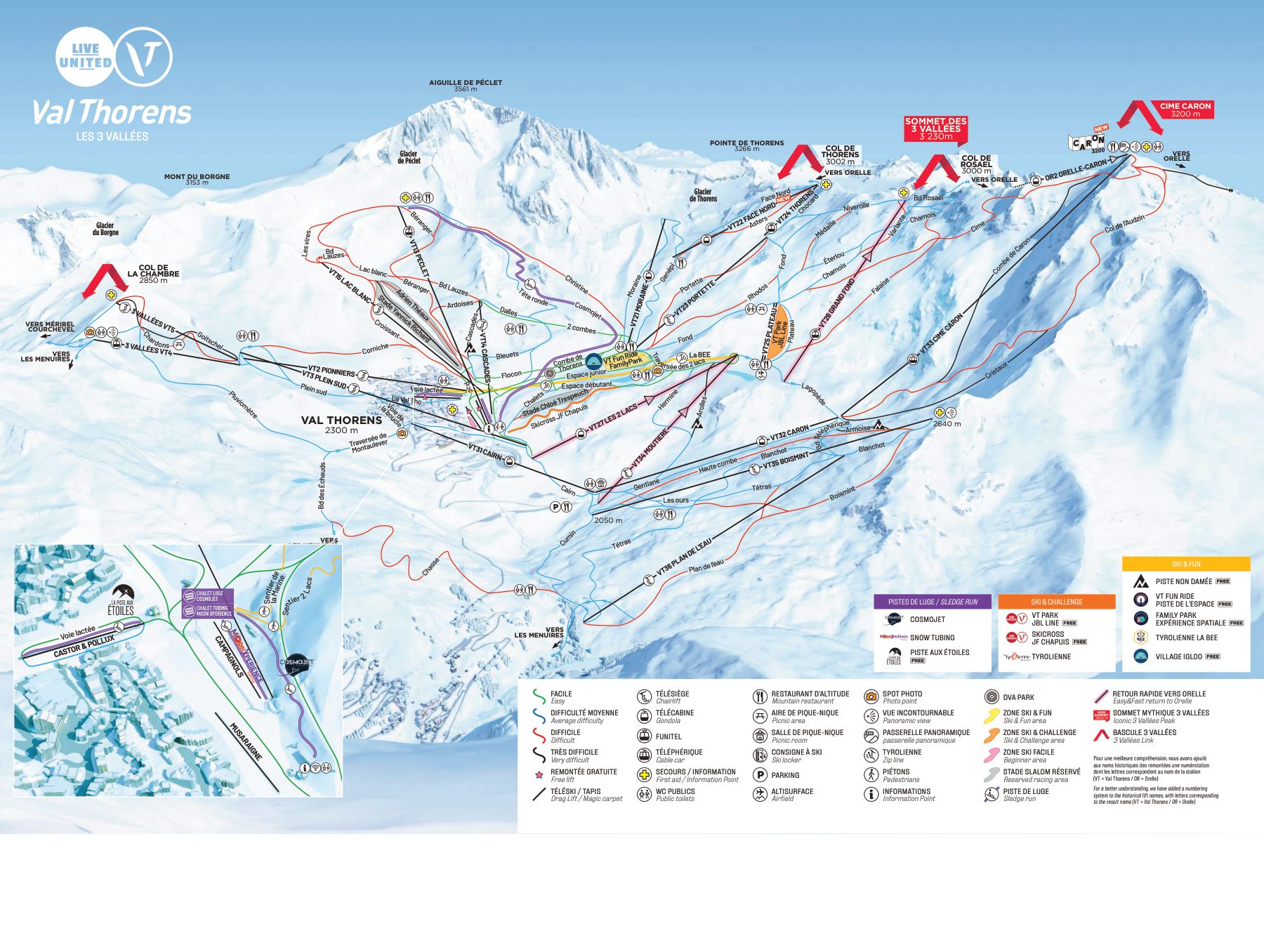
Always check the resort's live piste status before setting off. Runs shown on a map are not necessarily open, and off-piste terrain is never patrolled unless the map says so.
Val Thorens is excellent for beginners! The resort has dedicated beginner areas with gentle slopes, modern lifts, and excellent ski schools. The high altitude ensures good snow conditions throughout the season.
Perfect for intermediate skiers! Val Thorens offers a great variety of intermediate terrain with well-groomed pistes and modern lifts. The connection to the Three Valleys provides endless intermediate skiing options.
Advanced skiers will love Val Thorens! The resort offers challenging terrain, excellent off-piste opportunities, and access to the entire Three Valleys area. The high altitude provides excellent snow conditions for advanced skiing.
Official resort website: valthorens.com
Distances are straight-line, not by road.